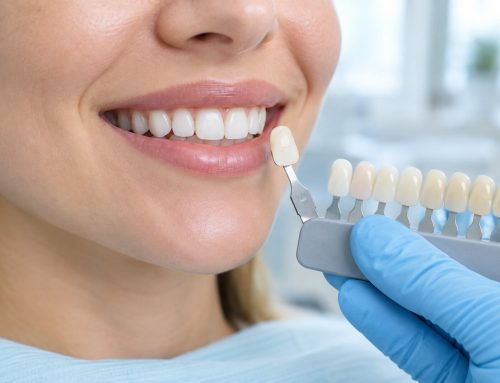

A tiny uneven edge on a front tooth can draw your eye every time you smile, even when nobody else notices it. If you have wondered whether a small adjustment could make your smile look more balanced, dental contouring may be worth discussing. Also called tooth reshaping or enameloplasty, it removes a carefully controlled amount of enamel to refine a tooth’s outline. For the right person, the change can be subtle yet satisfying.
At South Tulsa Dental, Dr. Christopher Tricinella and our team believe cosmetic decisions should start with a healthy foundation and a conversation about your goals. This guide explains what dental contouring in Tulsa can and cannot do, how the process typically works, and when another option may better protect your teeth. An examination is essential before deciding whether reshaping is appropriate for you.
What Is Dental Contouring?
Dental contouring is a conservative cosmetic technique that smooths or changes the shape of a tooth by removing a small amount of outer enamel. The aim is not to remake the entire tooth. Instead, a dentist may gently soften a pointed corner, even out a minor difference in length, or smooth a rough edge. Tooth reshaping can sometimes make neighboring teeth look more harmonious without adding material.
Enamel is the hard outer layer of a tooth, but it does not grow back after removal. That is why careful planning matters. A dentist must consider enamel thickness, the way your upper and lower teeth meet, and whether the edge you dislike is actually the result of a chip, wear, or an underlying bite issue. The right amount of change may be very small. If achieving your desired look would require removing too much enamel, another treatment may be safer.
Contouring is only one possible part of cosmetic dentistry at South Tulsa Dental. A personalized exam helps distinguish between an appearance concern and a problem that calls for restoration or other care.
What Can Tooth Reshaping Improve?
People often ask about contouring when one front tooth looks slightly longer than its neighbor or has a small point or irregularity. A minor uneven edge, a subtly square corner, or a rough spot that catches your tongue may also be a reason to ask. Sometimes smoothing a very small overlap in appearance can improve visual symmetry, though contouring cannot actually move teeth.
The key word is minor. Reshaping does not close a significant gap, rebuild a large chip, straighten crowded teeth, or fix a major bite discrepancy. It also does not change tooth color. If a tooth is damaged, cracked, sensitive, or heavily worn, simply removing more enamel could make matters worse. Your dentist will first look for the cause of the shape concern and explain realistic results.
For a missing corner or a shape that needs material added rather than removed, dental bonding may be a better comparison. Bonding uses tooth-colored resin to build up selected areas. In some cases, a dentist may discuss a combination of conservative reshaping and bonding to reach a balanced result.
What Happens at a Dental Contouring Consultation?
A good consultation starts with what you see when you smile. You can point out the specific tooth edge, explain what bothers you, and describe the degree of change you hope for. Dr. Tricinella can review your dental history, evaluate the condition of the tooth, and consider whether the proposed change would preserve enough enamel and avoid interfering with your bite.
The evaluation may include checking for decay, cracks, existing restorations, sensitivity, gum health, and signs of grinding. If the concern involves a tooth that has worn down, identifying why it wore down is especially important: a cosmetic touch-up alone may not address ongoing pressure. If you have been told you grind your teeth, our guide to teeth grinding and night guards explains why protecting tooth edges can matter.
Ask what portion of the tooth would be adjusted, what the result should look like, and whether the change can be demonstrated or planned before treatment. You should also ask whether leaving the edge alone is reasonable. Since enamel removal is permanent, it is worth making an informed choice instead of rushing to correct a detail that may not need treatment.
How Does the Tooth Reshaping Procedure Work?
When a patient is a suitable candidate, the dentist generally plans the intended contour and uses fine dental instruments to remove a very small amount of enamel. The surface is then smoothed and polished so the edge looks natural and feels comfortable. The dentist checks the appearance and bite before finishing. The extent of the work depends on the individual tooth and treatment plan.
Because enamel has no nerves, minor contouring often does not require an anesthetic, but every situation is different. Tell your dental team if a tooth is already sensitive or if you feel uncomfortable during the visit. If a deeper problem is discovered, the plan should change rather than forcing a cosmetic procedure onto a tooth that needs other attention.
Many patients appreciate that this is a focused treatment rather than a major restoration. Still, “simple” does not mean risk-free. Removing too much enamel can leave a tooth vulnerable to sensitivity or changes in how the teeth fit together. Skillful evaluation and restraint are more important than how quickly the procedure can be completed.
Contouring Versus Bonding, Veneers, and Orthodontics
There is no single best cosmetic treatment for every smile. The difference often comes down to whether the desired change requires removing a tiny amount of tooth structure, adding to the tooth, covering its front surface, or moving its position.
- Contouring reduces a small amount of enamel to refine an edge or outline; it cannot add length or cover stains.
- Bonding adds tooth-colored material to repair a small chip or modify shape. See our Tulsa dental bonding overview for what it can fix.
- Veneers cover the visible front of a tooth and may address broader changes in shape or color. Our porcelain veneers guide explains that process.
- Orthodontic treatment moves teeth when crowding, spacing, or alignment is the central concern. Our clear aligner guide introduces one approach.
Sometimes a concern that sounds like a small cosmetic issue is actually related to a damaged tooth or bite problem. An exam lets our team explain tradeoffs, including how much natural tooth structure each option preserves and what maintenance it may require. We will not know which approach is appropriate for you from a photograph or a search phrase alone.
Does Dental Contouring Hurt, and How Long Does It Last?
Minor shaping of healthy enamel is generally comfortable, although experiences vary. If you already have exposed dentin, sensitivity, a crack, or an existing restoration, the dentist may recommend a different plan. Speak up if something feels sharp, sensitive, or uncomfortable at any point.
The enamel that is removed does not return, so the shape change itself is permanent. That does not mean the tooth cannot change later. Teeth can chip or wear with time, particularly if you grind your teeth or bite hard objects. Good daily oral hygiene, regular checkups, and following any personalized protective advice can help preserve your result and the health of your smile. Avoid using your teeth as tools to open packages, and contact us if a newly adjusted edge later feels rough.
Cost varies with the number of teeth, the complexity of the case, and whether another procedure is needed. Cosmetic treatment may not be covered by insurance, but coverage differs by plan. Ask our team for an individualized estimate and check the details with your insurer rather than relying on a generic online price.
Is Dental Contouring Right for You?
You may be a good candidate if the change you want is small, your teeth are healthy, and an examination shows that adjusting the edge will leave adequate enamel and a comfortable bite. You may need a different solution if the tooth is significantly chipped, thin, sensitive, decayed, or worn, or if you want to change alignment or color. Only a dentist who has examined your teeth can make that call.
Our goal is to help you understand your options without over-treating a healthy smile. At South Tulsa Dental, you can bring specific questions about tooth reshaping to Dr. Tricinella and our team. We will discuss whether contouring is appropriate, whether another dental service makes more sense, and what kind of result is realistic for your smile.
Ready to explore dental contouring in Tulsa? Book an appointment with South Tulsa Dental or call (918) 628-0834. We are located at 6134 E 61st St, Tulsa, OK 74136, and would be glad to help you decide on a thoughtful next step.