
If you are unhappy with a front tooth that is chipped, stained, or oddly shaped, there is a good chance two words have come up: veneer and crown. Both are custom, tooth-colored, and made to blend in with the rest of your smile, so it is easy to see why people mix them up. But when you compare veneers vs crowns side by side, they do different jobs, they ask different things of your natural tooth, and the right choice usually depends more on the health of the tooth than on how you want it to look.
This guide walks through the real differences, including how much tooth each one removes, how long each tends to last, what they cost, and which one usually makes sense for front teeth. These are questions Dr. Tricinella and our team at South Tulsa Dental hear often, and we hope this helps you walk into your appointment ready to talk through your options.
Veneers vs Crowns: The Short Answer
The simplest way to put it: a veneer covers the front of a tooth, and a crown covers the whole tooth. Cleveland Clinic’s veneers overview describes veneers as a cosmetic treatment that improves your smile but does not necessarily strengthen or repair the tooth, while a crown’s main purpose is to restore a tooth that has been badly damaged by decay or injury. Here is how that plays out:
- Coverage: A veneer is a thin shell bonded to the front surface. A crown is a cap that fits over the entire visible part of the tooth.
- Main purpose: Veneers are mostly cosmetic. Crowns are mostly restorative, although they improve appearance too.
- Tooth preparation: Veneers remove a thin layer of enamel from the front. Crowns require shaping the tooth on every side.
- Best fit: Veneers suit healthy teeth with cosmetic concerns. Crowns suit teeth that are cracked, heavily filled, worn down, or treated with a root canal.
- Thickness: Healthline’s dentist-reviewed comparison puts a veneer at about 1 millimeter thick and a crown at about 2 millimeters.
Neither one is reversible. Once enamel is removed, the tooth will always need some kind of covering, so this is a decision worth making carefully.
What a Veneer Is and When It Makes Sense
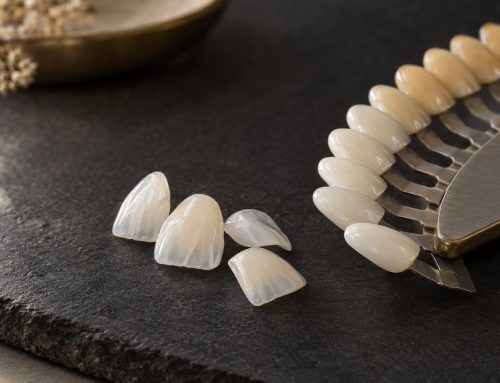
A veneer is a thin, custom-made covering for the front of a tooth. According to the American Dental Association’s veneers page, veneers can improve teeth that are chipped or broken, stained, or crooked and misshapen, and they can also mask small gaps. Porcelain veneers are strong, long-lasting, and natural-looking. Composite veneers are made from a tooth-colored filling material, are easier to fix if damaged, and are not as resistant to stains or wear.
At South Tulsa Dental, our porcelain veneers are custom designed to change the shape and color of your teeth, and the whole process usually takes a matter of weeks. You can read about each step, from smile design to bonding day, in our guide to porcelain veneers in Tulsa.
Veneers make the most sense when the tooth underneath is healthy. The ADA is clear that any decay or gum disease needs to be treated first, because placing veneers over unhealthy teeth can make existing problems worse. Veneers are a good fit for:
- Stains that do not improve with whitening
- Small chips or uneven edges on front teeth
- Teeth that look too small, too short, or slightly misshapen
- Small gaps between front teeth
If your main concern is color alone, whitening may get you there for less. Our comparison of veneers and teeth whitening can help you sort that out.
What a Crown Is and When You Need One
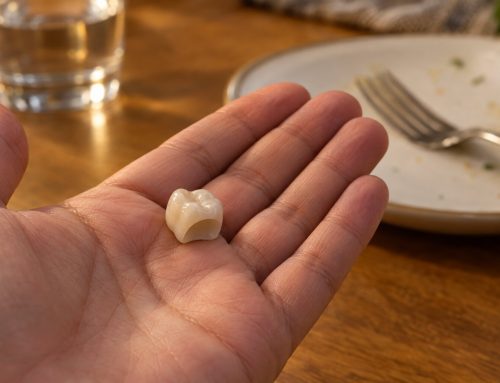
A crown is a tooth-shaped cap that fits over your entire tooth, which is why some people still call it a cap. The ADA’s crowns page explains that a crown can strengthen a tooth with a large filling when there is not enough tooth left to hold the filling, protect a weak tooth from breaking, restore one that is already broken, and cover a tooth that is badly discolored or shaped. Crowns also hold dental bridges in place and cover dental implants.
The Cleveland Clinic dental crowns guide adds a few more common reasons, including supporting a cracked tooth, restoring a worn-down tooth, and covering a tooth after a root canal. If you have had a root canal, a crown is often the next step. Cleveland Clinic lists covering a root canal-treated tooth among the main reasons dentists place crowns.
On our crowns and bridges page, you will see the two options it describes: ceramic crowns that are designed with a computer and 3D camera and finished in a single visit of a little over an hour, and gold crowns that take two visits. For a deeper look at materials, costs, and what each visit involves, see our complete guide to dental crowns in Tulsa.
How Much Natural Tooth Each One Removes
For many patients, this is the difference that matters most. Enamel does not grow back, so the less we remove, the more of your own tooth you keep.
A study by Edelhoff and Sorensen in the Journal of Prosthetic Dentistry measured exactly how much tooth structure different preparations take away, using model front teeth in a lab. Porcelain veneer preparations removed roughly 3 to 30 percent of the visible tooth by weight, depending on how far the veneer wrapped. Crown preparations removed roughly 63 to 72 percent. The authors concluded that veneers needed about one quarter to one half of the tooth reduction of a full crown.
That is a big gap, and it is the main reason dentists reach for a veneer first when a tooth is healthy and the goal is cosmetic. Healthline’s article quotes a general dentist with 40 years of experience making the same point: veneers require less tooth reduction than full crowns, but when there is not much tooth structure left, full coverage crowns are generally preferred.
Here is the flip side. A veneer needs enough healthy enamel to bond to. If a tooth already has a large filling, a deep crack, or significant wear, there may not be enough sound surface left for a veneer to hold well, and a crown becomes the stronger, safer option.
Strength, Lifespan, and Everyday Wear
Both restorations can last many years with good care, and both eventually need to be replaced. Here is what the research and major health sources say:
- Veneers: Cleveland Clinic gives porcelain veneers a lifespan of about 10 to 15 years with proper care. A long-term study at the Medical University Innsbruck that followed 318 porcelain veneers found an estimated survival rate of 93.5 percent at 10 years and nearly 83 percent at 20 years (Beier and colleagues, 2012).
- Crowns: Cleveland Clinic gives crowns an average lifespan of 5 to 15 years and notes that, with good care, they can last upwards of 30 years. A large systematic review of 67 studies found that about 95 percent of metal-ceramic crowns, and similar shares of most all-ceramic crown types, were still in service after five years.
The habits that shorten one tend to shorten the other. In the Innsbruck study, patients who ground or clenched their teeth had a 7.7 times greater risk of veneer failure, and teeth that had lost their nerve, such as root canal-treated teeth, also failed more often. The ADA notes that veneers may not be a good choice if you clench, grind, or have a deep overbite. Crowns hold up better to that kind of force because they wrap the whole tooth, though they can still chip or crack. If grinding is part of your story, our article on teeth grinding and night guards is worth a read either way.
Day-to-day care is similar for both: brush twice a day with fluoride toothpaste, clean between your teeth daily, and avoid chewing ice or hard candy. The ADA points out that you can still get cavities under or around a veneer, and Cleveland Clinic notes that a crown that does not fit well can trap bacteria. For a detailed look at what affects veneer longevity, see our guide on how long veneers last.
Front Teeth: Crowns vs Veneers
Front teeth are where this question comes up most, because they are the teeth people see. Here is how we usually think it through:
- A veneer is usually the better fit when the front tooth is healthy and the concern is color, a small chip, a minor gap, or an uneven shape. The dentist quoted by Healthline notes that veneers are usually placed on front teeth and only occasionally on premolars.
- A crown is usually the better fit when the front tooth has a large filling, a crack, a big break, heavy wear, or has had a root canal. A crown protects what is left of the tooth instead of just covering its face.
- Sometimes both are part of the plan. A patient may have veneers on healthy front teeth and a crown on one damaged tooth beside them. With careful shade selection, they can look like they belong together.
For back teeth, crowns are almost always the answer. Veneers are mainly a front tooth treatment, and molars need a restoration that covers the chewing surface. Cleveland Clinic notes that metal crowns rarely chip or break and are a good choice for molars that are out of sight, which is one reason some patients choose gold for a back tooth.
If your front tooth was recently chipped or broken, our guide to broken tooth repair explains how the size of the break shapes the options, and smaller chips can sometimes be fixed with dental bonding instead of either one.
Cost and Insurance
Per tooth, porcelain veneers and crowns are often in a similar range. The dentist quoted in Healthline’s comparison says the costs of veneers and crowns are similar, and the bigger difference usually comes from how many teeth are treated. Healthline points out that both are costly, especially when more than one tooth is involved. A crown is often placed on one problem tooth, while veneers are often planned for several front teeth so the smile looks even.
Insurance is where the two really split. The ADA notes that veneers are considered cosmetic dentistry, so they may not be covered unless they are deemed medically necessary. Crowns are restorative, and Healthline notes that dental insurance may cover a portion of a crown’s cost. Every plan is different, so it helps to check your benefits before you decide.
For local price ranges, see our breakdowns of what veneers cost in Tulsa and the cost section of our crown guide linked above. Our team is also happy to help you review your benefits and plan for treatment.
Whitening, Shade Matching, and Mixing Both
One detail surprises a lot of people: once a veneer or crown is made, its color is set. The ADA’s teeth whitening guidance notes that whitening will not work on caps, veneers, crowns, or fillings. Cleveland Clinic goes a step further and advises avoiding whitening products on veneers, since they can scratch them.
That means timing matters. If you would like your natural teeth brighter, it usually makes sense to do professional teeth whitening first, let the color settle, and then match any new veneers or crowns to your new shade. Otherwise, you could end up with a bright crown next to teeth that are a few shades darker, or the reverse.
People also ask whether a veneer can go over an existing crown. As Healthline explains, a veneer needs enough enamel on the tooth to bond to, so placing one over a crown is not the usual approach. When an older crown no longer matches, the more common fix is to replace that crown with a new one shaded to fit in with the teeth around it.
How Dr. Tricinella Helps You Choose
There is no single right answer for everyone, which is why the decision starts with an exam rather than a price list. When you come in to talk about veneers or crowns, Dr. Tricinella and our team will:
- Check the health of each tooth. We look for decay, old fillings, cracks, and gum health, and take X-rays when they are needed. Problems like cavities or gum disease get treated first.
- Look at your bite and habits. Signs of grinding, a deep overbite, or worn edges all point toward a stronger restoration or a plan that includes a night guard.
- Talk through your goals. Some patients want a whole new smile. Others just want one tooth to stop bothering them. Both are good reasons to come in.
- Lay out the options and the tradeoffs. That might be veneers, a crown, a combination, or a more conservative step like whitening or bonding. As our crowns page puts it, Dr. Tricinella and his staff will discuss the pros and cons of each restoration and help you choose what fits your situation.
If you choose a ceramic crown, it can often be designed, made, and placed in a single visit, so there is no temporary to deal with. Our post on same-day crowns explains how that works. For a broader look at the cosmetic side of things, visit our cosmetic dentistry page.
Veneers vs Crowns FAQs
Which lasts longer, veneers or crowns?
They are fairly close. Cleveland Clinic gives porcelain veneers a lifespan of about 10 to 15 years and crowns an average of 5 to 15 years, with some crowns lasting upwards of 30 years. How long yours lasts depends far more on grinding, oral hygiene, the health of the tooth underneath, and regular checkups than on which one you choose.
Do veneers or crowns look more natural?
Both can look very natural when they are well made and well matched. The ADA describes porcelain veneers as natural-looking, and Cleveland Clinic notes that veneers resist staining better than natural enamel. Cleveland Clinic also says all-ceramic crowns mimic the look of tooth enamel more than any other crown type. Metal and gold crowns do not look like natural teeth, so they are usually reserved for molars.
Can you put veneers over crowns?
Not usually. Veneers are made to bond to natural enamel, and a crown does not give them that surface. If an existing crown no longer matches the teeth around it, the typical solution is to replace the crown with a new one in a better shade, often as part of a plan that includes veneers on the neighboring teeth.
Are veneers or crowns better for front teeth?
It depends on the tooth. If a front tooth is healthy and the concern is color, shape, or a small chip, a veneer usually keeps more of your natural tooth. If the tooth has a large filling, a crack, heavy wear, or a root canal, a crown usually gives it the protection it needs.
Does getting a veneer or a crown hurt?
Healthline notes that a local anesthetic may be used when the tooth is prepared for either one, and Cleveland Clinic says your dentist can give you more anesthesia if you feel pain during a crown procedure. Cleveland Clinic also notes that some sensitivity to heat and cold is normal for a couple of weeks after a crown, and that veneered teeth may also become more sensitive to temperature. If dental visits make you nervous, ask us about our sedation options.
Talk With South Tulsa Dental About Veneers or Crowns
Veneers and crowns can both give you a smile you feel good about. The difference is in what the tooth underneath needs. A healthy tooth with a cosmetic concern often does well with a veneer, and a damaged or weakened tooth usually needs the full protection of a crown. The best way to know is to have the tooth examined.
Dr. Tricinella and our team see patients at our office on East 61st Street, a block west of Sheridan. You can learn more about our veneer options and crown and bridge treatment, browse our full list of dental services, or book an appointment online. New patients can save time by filling out our new patient forms before the visit, and if the dental chair makes you anxious, our sedation dentistry can help you relax. Prefer to talk it through first? Call us at (918) 628-0834.