
You have a stuffy nose, your face feels heavy, and now your upper back teeth ache too. It is natural to wonder whether you have a cavity on top of a cold. Sinus tooth pain is more common than most people realize, and it can feel a lot like a real toothache. The tricky part is that the reverse can also happen: a problem tooth can sometimes set off sinus symptoms.
Dr. Tricinella and our team at South Tulsa Dental put this guide together to explain why sinus problems can make teeth hurt, how to tell the difference, what helps at home, and when to call us or your doctor.
Can a Sinus Infection Cause Tooth Pain?
Yes. Mayo Clinic’s answer on sinus infections and toothaches says a sinus infection can cause a toothache and that pain in the upper back teeth is a fairly common symptom of sinus conditions. Cleveland Clinic’s page on acute sinusitis also lists toothache among the possible symptoms, along with fever, fatigue, ear pain, and a reduced sense of smell and taste.
Cleveland Clinic notes that about 1 in 8 adults get a sinus infection each year, often after a cold. You do not even need a full infection to feel it in your teeth. According to Cleveland Clinic’s sinus pressure guide, sinus pressure from colds, allergies, or infections can radiate to the scalp, teeth, and jaws, and it commonly shows up as pain around the upper molars.
Why Your Upper Back Teeth Feel It
Your sinuses are air-filled spaces in the bones of your face that connect to your nose. The largest pair, the maxillary sinuses, sit behind your cheekbones, right above the back teeth of your upper jaw. Mayo Clinic explains that the roots of the upper teeth are very near the sinus floor and may even extend into the sinus cavity.
When the lining of those sinuses swells and mucus cannot drain, pressure builds. In a University of Cincinnati article on sinus infection tooth pain, otolaryngologist Ahmad Sedaghat, MD, PhD, explains that this pressure can irritate the nerves of the teeth and cause pain. That is why sinus tooth pain usually centers on the upper premolars and molars rather than your front teeth or your lower jaw.
What Sinus Tooth Pain Feels Like
UT Dentistry at UT Health San Antonio shared a helpful breakdown from Nikita B. Ruparel, DDS, MS, PhD, a board-certified endodontist. Sinus-related tooth pain tends to come from pressure and inflammation in the sinus rather than from one specific tooth. Common features include:
- A spread-out ache. The pain is hard to pin down and may feel like several upper teeth hurt at once.
- Pressure more than sharpness. Many people describe a heavy, dull, aching feeling across the upper premolars and molars.
- Pain that changes with your head position. It often gets worse when you bend forward or lie down.
- Nasal symptoms at the same time. Congestion, facial fullness, and sinus pressure usually come along for the ride.
- One side or both. If both sinuses are inflamed, you may feel it on both sides of your face.
Other sinus symptoms can help you connect the dots. The CDC’s sinus infection basics lists a runny or stuffy nose, facial pain or pressure, headache, postnasal drip, sore throat, cough, and even bad breath. If your breath has changed along with your stuffy nose, our guide to bad breath causes and treatment explains the other common culprits.
Sinus Tooth Pain vs. a Toothache: How to Tell the Difference
There is no perfect at-home test, but the pattern of your pain offers good clues.
Signs that point toward your sinuses
- Several upper back teeth ache, and you cannot point to just one.
- The ache started with a cold, allergies, or a stuffy nose.
- It feels worse when you bend over or lie down.
- Your lower teeth feel fine. Dr. Sedaghat notes that pain limited to the upper teeth, together with nasal symptoms and a headache, suggests a sinus problem.
Signs that point toward a tooth
- The pain is focused on one tooth, especially at first.
- It feels sharp, throbbing, or like a deep, constant ache.
- Biting, chewing, or tapping on the tooth makes it worse.
- The pain wakes you up at night.
- Hot or cold food and drinks trigger it, which Cleveland Clinic’s toothache guide links to cavities, cracks, and gum disease.
- You notice gum swelling or a bad taste around the tooth.
Dr. Ruparel also points out a telling difference in how each problem resolves. Sinus pain does not go away with dental treatment, while tooth pain caused by a tooth infection, including sinus pressure that comes from that infection, clears up once the tooth is treated. If you are not sure which camp you fall into, our article on what causes toothaches and when to see a dentist walks through the most common dental causes in more detail.
When a Tooth Is Behind the Sinus Problem
The connection between teeth and sinuses runs both ways. Mayo Clinic notes that damage to or infection in a tooth may lead to long-lasting sinusitis. Dentists and ear, nose, and throat doctors call this odontogenic sinusitis, which simply means sinusitis that starts from a tooth.
The American Association of Endodontists takes this seriously. Its position statement on maxillary sinusitis of endodontic origin explains that an infection inside an upper back tooth can spread into the sinus above it. The statement cites research that found a dental cause in about 40% of cases of chronic bacterial maxillary sinusitis in one study, and an odontogenic source in 72% of one-sided sinusitis cases in another.
Here is the surprising part. In the AAE’s summary of this condition, endodontist Dr. Roderick Tataryn writes that people with it usually have sinus symptoms such as congestion, a runny nose, drainage down the back of the throat, facial pain, and a foul odor, yet rarely have typical tooth pain. That is because the infection is often draining into the sinus instead of building pressure around the tooth. The tooth involved usually has a dead nerve or an older root canal that has started to fail.
Clues that a tooth may be involved:
- Sinus infections that keep coming back on the same side. The AAE calls a history of one-sided, recurring sinus infections a strong indicator.
- A bad smell or taste that lingers after other cold symptoms fade.
- An upper back tooth that has had a large filling, a crown, a crack, or an injury.
- A tooth that has changed color or that once hurt badly and then went quiet, which can be a sign the nerve has died. Our guide to what a dead tooth is and how it is treated explains why that matters.
The AAE also notes that these infections can be easy to miss on standard dental X-rays and on sinus scans. If your sinus problem keeps returning on one side, ask both your doctor and your dentist to look for a dental source.
How to Relieve Tooth Pain From Sinus Pressure
When the sinus is the source, easing the congestion usually eases the teeth too. These steps come from the CDC and Cleveland Clinic:
- Use warmth. The CDC suggests a warm compress over the nose and forehead to relieve sinus pressure.
- Breathe in steam. A hot shower works well. Cleveland Clinic also describes leaning over a bowl of hot water with a towel over your head, but be careful to keep the bowl on a stable surface so you do not get burned.
- Rinse or moisten your nose. A saline spray or gel helps keep nasal passages moist. If you use a neti pot or other rinse bottle, Cleveland Clinic advises using distilled or sterile water.
- Drink plenty of fluids. Cleveland Clinic notes that dehydration can make sinus pressure worse.
- Sleep with your head raised. Propping yourself up on a few pillows can help you breathe more comfortably at night, and it may take some pressure off your upper teeth since lying flat often makes sinus tooth pain worse.
- Try gentle facial massage. Cleveland Clinic suggests small circles with your fingertips over pressure points, including beside your nose and the area between your cheekbones and jaw.
- Consider over-the-counter medicine. Cleveland Clinic lists acetaminophen or ibuprofen for pain, along with nasal steroid sprays and decongestants. Use decongestant nasal sprays for no more than three days to avoid rebound congestion, and do not take oral decongestants for more than a week without talking to a healthcare provider. Always follow the label, and ask your pharmacist or doctor if you take other medicines or have a health condition.
If an ache in one tooth does not improve as your nose clears up, it is time for an exam rather than more home care.
How Long Does Sinus Tooth Pain Last?
Sinus tooth pain usually lasts as long as the sinus problem behind it. Cleveland Clinic says acute sinusitis symptoms typically last seven to 10 days and can sometimes stick around for two to four weeks. Symptoms that last 12 weeks or more are considered chronic sinusitis.
Most of the time, sinus infections get better on their own. The CDC notes that viruses cause most sinus infections and that many do not need antibiotics, although your healthcare provider can decide if you need one. Cleveland Clinic adds that symptoms lasting more than 10 days without improvement, or symptoms that get worse after starting to improve, may point to a bacterial infection.
A good rule of thumb: if your congestion is gone but a tooth still aches, the tooth deserves a closer look. Cleveland Clinic recommends calling a dentist for any toothache that lasts longer than two days.
Should You See a Dentist or a Doctor?
Mayo Clinic recommends starting with your dentist when you have a toothache. Your dentist can check for cavities, gum disease, or infection. If those are ruled out, the next step is your doctor, who can look for a sinus condition or another medical cause.
Call our office if you notice
- Pain that centers on one tooth or is getting worse.
- Tooth pain that hangs on after your sinus symptoms have improved.
- Pain when you bite, chew, or open wide.
- Swelling in your gums, face, or jaw.
- Sinus infections that keep returning on the same side.
Patients with severe tooth pain are seen the same day. Our emergency dental services page explains how to reach us quickly, and our guide to dental emergencies in Tulsa covers what to do before you arrive.
See your doctor if you have
The CDC recommends seeing a healthcare provider for severe headache or facial pain, symptoms that get worse after improving, symptoms lasting more than 10 days without getting better, a fever lasting longer than three or four days, or several sinus infections in the past year. Cleveland Clinic adds a fever of 103 degrees Fahrenheit or higher and severe pain that does not improve with medication.
Get emergency care right away for
Dr. Sedaghat advises immediate medical attention for eye pain and swelling, mental confusion, or a stiff neck. For dental pain, Cleveland Clinic recommends the emergency room for swelling below your eye or a knot on your jaw, unbearable pain that medication does not help, bleeding that will not stop, or a fever over 101 degrees Fahrenheit.
How Dr. Tricinella Finds the Source of Upper Tooth Pain
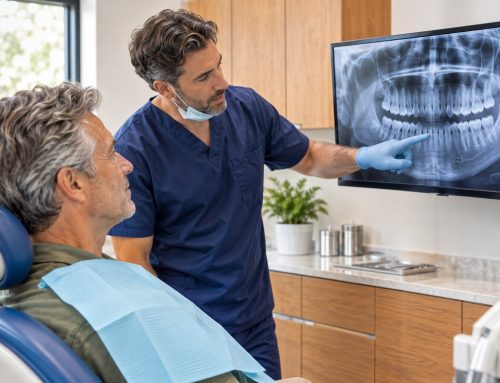
When you come in with an aching upper tooth, Dr. Tricinella starts by listening. When did the pain start? Did you have a cold or allergies first? Does it hurt to bite, or does it feel worse when you bend over? Your answers help narrow things down quickly.
From there, the exam usually includes:
- A careful look at your teeth and gums for decay, cracks, worn fillings, gum swelling, or signs of infection.
- Digital X-rays to see the roots and the bone around them. Our article on dental X-rays at our South Tulsa office explains what they show.
- Tapping and bite tests to see whether one tooth is tender. A sinus problem tends to make several teeth feel sore, while a problem tooth usually stands out.
- Cold or heat testing to see if the nerve inside a tooth is healthy, irritated, or no longer responding.
If the cause is dental, Dr. Tricinella will explain what he found and walk you through your options before any treatment begins. A cavity may need a filling, which our cavity treatment guide describes. A cracked or badly weakened tooth may need a crown, and our crowns and bridges page covers our one-visit ceramic and two-visit gold crowns. When an infection has reached the nerve, dentists usually recommend root canal treatment, which our root canal overview explains. If we find a cracked or chipped tooth, our broken tooth repair guide covers the common fixes.
If your teeth look healthy, the sinus becomes the more likely source, and we will suggest a visit with your doctor, who can decide on medicine or a referral to an ear, nose, and throat specialist.
Other Things That Can Make Upper Teeth Ache
Sinus pressure is not the only thing that gets mistaken for a toothache, and a toothache is not always a cavity. Cleveland Clinic lists several common causes of tooth pain, including cavities, an abscessed tooth, a cracked tooth, a damaged filling or crown, gum disease, and teeth grinding or clenching.
- Grinding and clenching can leave several teeth sore at once, a lot like sinus pain. Our guide to teeth grinding and night guards explains the signs.
- Sensitivity from worn enamel or exposed roots causes a quick zing with cold drinks or sweets. Our article on sensitive teeth treatment covers the usual causes and fixes.
- Gum problems can make teeth feel tender and achy. Our gum disease guide describes the early warning signs.
Lowering the Odds of Sinus Tooth Pain
You cannot prevent every cold, but a few habits help. The CDC recommends staying up to date on vaccines such as the flu shot, keeping your distance from people with colds, avoiding smoking and secondhand smoke, and using a clean humidifier at home. Cleveland Clinic adds frequent handwashing and keeping allergies under control.
On the dental side, regular checkups give us a chance to catch a deep cavity, a failing filling, or a quiet infection in an upper tooth before it causes pain or affects your sinus. Our article on what to expect at a dental checkup explains how these visits work.
Sinus Tooth Pain FAQs
Can a sinus infection make all of my upper teeth hurt?
It can make several of them ache at once. Sinus tooth pain usually affects the upper premolars and molars, which sit just below the maxillary sinuses. It tends to feel like a general ache across the upper jaw rather than pain in one specific tooth.
Why does sinus tooth pain sometimes happen on one side only?
You have a maxillary sinus on each side of your face, and only one may be inflamed. One-sided pain is still worth watching, though. The American Association of Endodontists notes that sinus infections that keep coming back on the same side can be a sign that an infected upper tooth is involved.
Can sinus pressure make my lower teeth hurt?
The maxillary sinuses sit above the upper teeth, so sinus tooth pain usually stays in the upper jaw. If your lower teeth hurt, a dental cause such as a cavity, a cracked tooth, or grinding is more likely, and it is a good idea to have them checked.
Will antibiotics fix sinus tooth pain?
Not always. The CDC says viruses cause most sinus infections and many do not need antibiotics. If an infected tooth is causing the sinus problem, the American Association of Endodontists says antibiotics may ease symptoms for a while but do not solve it on their own. The tooth itself needs to be treated.
Can a tooth infection spread to the sinus?
Yes. An infection in an upper back tooth can spread into the sinus above it. This kind of sinus infection often causes congestion, drainage, facial pain, and a bad smell, sometimes without much tooth pain at all. A dental exam and X-rays can help find the source.
Not Sure If It Is Your Sinuses or a Tooth? We Can Help
Sinus tooth pain usually fades as your congestion clears. When it does not, or when one tooth keeps bothering you, Dr. Tricinella and our team can find the real cause and help you feel better.
If the pain is severe, call us right away. Patients with severe tooth pain are seen the same day, and our same-day emergency care page has the details.
You can find us at our office on East 61st Street, a block west of Sheridan. Browse our full list of dental services, book an appointment online, or fill out our new patient forms ahead of time. If dental visits make you nervous, ask about our sedation options. You can also call us at (918) 628-0834.