
A wiggly tooth is a milestone when you are six. When you are an adult, it means something else. In its guide to loose teeth, Cleveland Clinic says that a loose adult (permanent) tooth “is never typical” and always points to an underlying issue like trauma or disease. The encouraging part is that a loose adult tooth can often be saved, especially when a dentist treats the cause early.
Dr. Tricinella and our team at South Tulsa Dental put this guide together so you know what a loose tooth can mean and what to do next. If your tooth loosened after a fall, a sports injury, or an accident, call us now at (918) 628-0834. As our emergency dental services page explains, patients with severe tooth pain are seen the same day.
Is a Loose Adult Tooth Ever Normal?
No. Baby teeth loosen and fall out as permanent teeth come in, so a wobbly tooth is expected in children. Adult teeth are meant to stay put. Gum disease is the most common cause of a loose adult tooth, but injuries, teeth grinding, and pregnancy can loosen one too.
You might first notice the problem while brushing, flossing, or eating, or your bite may simply feel “off” when your teeth come together. Healthline’s guide to loose teeth in adults notes that the slightest touch may move a loose tooth and that eating or chewing can loosen it further. Other signs often show up along with it:
- Red, tender, or swollen gums
- Gums that bleed when you brush or floss
- Gums pulling back from the tooth, which our guide to receding gums covers in detail
- A change in the tooth’s color
- Teeth that seem to be separating, or a change in the way your teeth fit together when you bite
The first four are on Cleveland Clinic’s list of loose tooth symptoms, and the last one combines two warning signs of gum disease listed by the American Dental Association’s MouthHealthy site.
What Causes a Loose Tooth in Adults?
Finding the cause matters, because the treatment depends on it. These are the most common reasons a permanent tooth loosens.
Gum disease (periodontitis)
Gum disease is the most common cause of loose teeth in adults, according to Cleveland Clinic. It starts with plaque, the sticky film of bacteria that constantly forms on teeth. When plaque is not cleaned away, it hardens into tartar that only a dental professional can remove. Tartar causes the gums to pull away from the teeth, leaving gaps that can become infected. The Mayo Clinic explains that without treatment, periodontitis can destroy the bone that supports your teeth, which can cause teeth to loosen or fall out.
Gum disease is very common. The CDC reports that about 4 in 10 U.S. adults 30 and older had some level of periodontitis in 2009 to 2014, and about 60% of adults 65 and older did. It is also easy to miss. MouthHealthy points out that gum disease is usually painless, so many people do not know they have it. If your gums bleed when you brush, or you have bad breath that keeps coming back, our guides to gum disease warning signs and bad breath explain what those signs can mean.
An injury to the mouth
A blow to the face from a fall, a car accident, or a sports collision can loosen one or more teeth. The American Association of Endodontists (AAE) explains that an injury can push a tooth sideways, partly out of its socket, or deeper into it. The AAE also notes that permanent teeth knocked out of position usually need root canal treatment a few days later, so a tooth that took a hard hit deserves an exam even if it starts to feel better. Our article on a dead tooth explains what can happen inside an injured tooth over the following weeks.
Teeth grinding and clenching
Grinding or clenching your teeth, a habit called bruxism, puts extra pressure on your teeth. Cleveland Clinic says it can cause tooth mobility over time, and Mayo Clinic’s page on bruxism lists teeth that are “flattened, fractured, chipped or loose” among its symptoms. Many people grind in their sleep and do not know it until they have tooth or jaw problems, such as a sore jaw or a dull headache at the temples. Our post on teeth grinding and night guards covers the signs in more detail.
Pregnancy
Hormone changes during pregnancy can make teeth feel loose. Cleveland Clinic explains that surges of progesterone and estrogen can temporarily loosen the tissues that hold teeth in place, and that the symptoms usually go away after childbirth. Medical News Today adds that anyone with pain or loose teeth during pregnancy should still contact a dentist to rule out gum disease, and that dental checkups, cleanings, and X-rays are safe during pregnancy according to the American Dental Association and the American College of Obstetricians and Gynecologists. Our guides to pregnancy gingivitis and going to the dentist while pregnant have more detail.
Osteoporosis and some bone medicines
Osteoporosis weakens bones, and the jaw is no exception. The Health Resources and Services Administration (HRSA), a federal health agency, notes that osteoporosis can affect the jawbone and may lead to teeth becoming loose or falling out. Medical News Today describes a much less common link: in rare cases, bisphosphonates, a type of medicine used to treat bone loss, can lead to loose teeth through a jaw condition called osteonecrosis. If you take medicine for bone density, let Dr. Tricinella know, and talk with your doctor about its side effects.
Other things that raise your risk
Some habits and health conditions make gum disease, and therefore loose teeth, more likely. Mayo Clinic’s list of risk factors for periodontitis includes smoking or chewing tobacco, vaping, hormonal changes such as pregnancy or menopause, poor nutrition including a low vitamin C level, diabetes, and medicines that cause dry mouth or gum changes. The CDC found that about 62% of U.S. adults 30 and older who were current smokers had periodontitis in 2009 to 2014. If a medicine leaves your mouth dry, our dry mouth guide has tips to help protect your teeth and gums.
What to Do Right Away If a Tooth Feels Loose
Call your dentist and get the earliest appointment you can. Cleveland Clinic is clear that wobbly permanent teeth need professional treatment and that delaying usually only makes things worse. While you wait for your visit, these steps can help keep the area calm:
- Rinse with warm salt water to help reduce inflammation.
- Swish with an antibacterial mouth rinse twice a day to cut down on bacteria.
- Choose softer foods and skip anything hard, crunchy, or chewy.
Keep brushing and flossing too, with a gentle touch around the loose tooth. Plaque left along the gumline is what feeds gum disease, so skipping that area can make things worse. None of these steps will tighten a loose tooth, though. They simply lower the risk of further problems until a dentist can find and treat the cause.
When Is a Loose Tooth an Emergency?
If a tooth loosens gradually, call for the next available appointment. Cleveland Clinic notes that it could mean gum disease and that your dentist can begin treatment right away. A tooth loosened by an injury needs faster care. After a car accident, sports injury, or similar trauma, Cleveland Clinic advises calling your dentist right away, and it notes that stabilizing a loose tooth is most successful when treatment begins within one hour of the injury. A fully or partially knocked out tooth is a dental emergency, and if you cannot reach your dentist, head to the nearest emergency room.
If a permanent tooth is knocked out completely, the AAE’s steps for a knocked out tooth say to act quickly, ideally within 30 minutes:
- Pick the tooth up by the crown, the chewing surface, and never touch the root.
- If it is dirty, rinse it gently with water only. Do not scrub it, dry it, or wrap it in a tissue.
- Try to place it back in the socket right away and hold it there with your fingers or by gently biting down.
- If it will not go back in, keep it moist in milk or in your mouth next to your cheek. Do not store it in tap water.
- Get to a dentist or endodontist right away and bring the tooth with you.
The AAE adds that a tooth can sometimes be saved even after it has been out of the mouth for an hour or more, so do not give up if more time has passed. Our emergency dentist guide walks through other urgent situations step by step.
Also watch for signs of a spreading infection. Cleveland Clinic’s page on abscessed teeth says to go to the nearest emergency room if a tooth abscess comes with a fever of 100.4°F or higher, facial swelling, difficulty swallowing, confusion, or an elevated heart rate.
For urgent dental problems in Tulsa, call our office at (918) 628-0834. Patients with severe tooth pain are seen the same day, and our emergency services page asks anyone with a sports or accident injury to call right away. After hours, our answering machine gives the number for our emergency service.
How a Dentist Finds the Cause
Because treatment depends on the cause, the first step is a careful exam. According to the National Institute of Dental and Craniofacial Research (NIDCR), a dentist checking for gum disease will:
- Examine your gums for inflammation, bleeding, and gums pulling away from the teeth.
- Measure the spaces around each tooth with a tiny ruler called a probe. Healthy pockets are usually between 1 and 3 millimeters, and deeper pockets can be a sign of periodontal disease.
- Check your teeth, since advanced gum disease can destroy the bone that supports them and cause them to loosen and shift.
- Ask about your medical history, because factors like tobacco use or diabetes can contribute to gum disease.
- Take X-rays to see whether there is any bone loss.
At your first appointment with us, our staff reviews your chart and the reason for your visit, and the X-rays and pictures Dr. Tricinella needs are taken. He then goes over the treatment you need and answers your questions so you fully understand your options. Our posts on what to expect at a dental checkup and dental X-rays explain more, and you can fill out our new patient forms before you arrive.
Can a Loose Adult Tooth Tighten Back Up?
It can, depending on the cause and how early it is treated. Cleveland Clinic notes that some loose teeth tighten up again with nonsurgical treatments like dental cleanings and better oral hygiene at home, and that in many cases dentists can save wobbly teeth. Early treatment is the key. Here is how treatment usually lines up with the cause.
When gum disease is the cause
The usual first step is a deep cleaning called scaling and root planing. Healthline explains that scaling removes tartar and bacteria, while root planing smooths the root surface and helps the gums reattach to the tooth. NIDCR notes that a dentist may also prescribe medication such as an oral rinse. More advanced gum disease may need surgery. Cleveland Clinic lists options such as flap surgery, dental bone grafts, and gum grafts. NIDCR adds that your dentist may refer you to a periodontist, a specialist in gum disease, who may offer treatment options your own dentist does not.
According to the CDC, periodontitis cannot be reversed, but it can be slowed down and managed with professional treatment. That is why steady home care and regular cleanings matter so much afterward. Our posts on regular cleanings versus deep cleanings and periodontal disease treatment options go deeper.
When grinding or bite pressure is the cause
When clenching or grinding is putting too much pressure on a tooth, Cleveland Clinic lists two nonsurgical options. A bite adjustment removes a very small amount of enamel from the loose tooth and the tooth it bites against, which takes excess pressure off your bite and lets the tooth heal. A night guard, worn while you sleep, creates a protective barrier between your upper and lower teeth, as Healthline puts it.
When an injury is the cause
After an injury, the goal is to get the tooth back in position and hold it steady while it heals. The AAE explains that a dentist or endodontist repositions and stabilizes a dislodged tooth. One way to do that is splinting. The loose tooth is bonded to the teeth beside it, which gives it extra support and keeps it from moving while it heals. Cleveland Clinic notes that splinting may help when the tooth has not pulled away from the gums. If the nerve was damaged, our root canal guide explains what that treatment involves.
When a tooth cannot be saved
Sometimes a loose tooth has lost too much support to keep. In that case, Cleveland Clinic says your dentist will likely recommend removing the tooth and replacing it, for example with a bridge or a dental implant. Our tooth extraction guide walks through what removal involves.
Replacing a missing tooth matters for more than looks. As our crowns and bridges page explains, a missing tooth no longer holds its neighbors in place, so they can move into the empty space, which can lead to problems ranging from trouble chewing to periodontal disease.
To replace one or a few teeth, South Tulsa Dental offers bridges and partial dentures. A dental bridge is permanently cemented in place and made to blend in with your natural teeth. Partial dentures are removable, attach to your remaining teeth, and fill in the teeth that are missing in that arch. If you need something while you heal, our flipper tooth guide explains that short-term option. Implants are another way dentists replace missing teeth, and our dental implant guide explains how they work.
How to Lower Your Risk of Loose Teeth
You cannot prevent every loose tooth, since accidents happen. But Cleveland Clinic lists several habits that lower your risk:
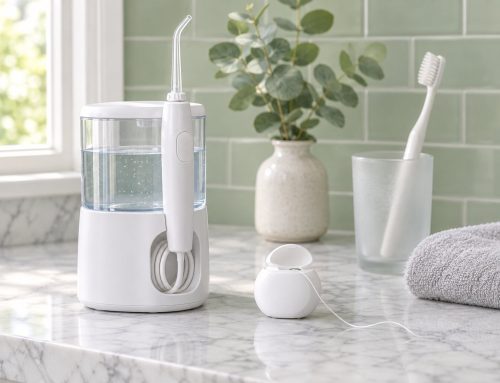
- Keep up good oral hygiene. Mayo Clinic recommends brushing for two minutes at least twice a day and flossing at least once a day. Our comparison of a water flosser vs floss can help you pick a tool you will actually use.
- Avoid smoking and vaping.
- Wear a night guard if you grind your teeth.
- Wear a mouthguard for contact sports. Our sports mouthguard guide explains the options.
- Get enough calcium and vitamin D.
- See your dentist regularly for exams and cleanings.
How often is regularly? Cleveland Clinic says many people do well with visits every six months, and Mayo Clinic suggests cleanings usually every 6 to 12 months, with more frequent cleanings if you have risk factors such as dry mouth, certain medicines, or smoking. Regular cleanings also remove tartar before it can do damage. Our guide on how to remove tartar explains why only a dental professional can remove it once it hardens.
Getting a Loose Tooth Checked at South Tulsa Dental
If one of your teeth feels loose, call us at (918) 628-0834 or book an appointment online. Dr. Tricinella will look for the cause and answer your questions so you fully understand your treatment options. Before any treatment is done, you receive a treatment plan with all of the costs, so you can decide with all of the information in front of you. Our patient FAQs cover insurance and other common questions.
If dental visits make you nervous, we can help with that too. We offer nitrous oxide, also called laughing gas, and conscious sedation, which starts with a pill taken an hour before treatment and requires a driver afterward. Our sedation dentistry page and dental anxiety guide explain both. You can also browse all of our dental services.
Our office is on East 61st Street, a block west of Sheridan. We are open Monday through Wednesday from 8:00 to 5:00, Thursday from 12:00 to 7:00, and Friday from 8:00 to 12:00.
Loose Tooth FAQs
Can a loose adult tooth tighten back up on its own?
Usually not without professional help. Cleveland Clinic says wobbly permanent teeth need professional treatment and that home steps like salt water rinses will not tighten a loose tooth. With the right care, though, some loose teeth do tighten again, for example after dental cleanings combined with better brushing and flossing at home. Looseness from pregnancy hormones usually goes away after childbirth, but it is still worth a dental visit to rule out gum disease.
Should I pull out a loose adult tooth myself?
No. Cleveland Clinic notes that in many cases dentists can save wobbly teeth, especially with early treatment, and pulling the tooth yourself takes that chance away. Call your dentist instead. If the tooth cannot be saved, your dentist can remove it and talk with you about replacing it with an option such as a bridge, a partial denture, or an implant.
Is a loose tooth after a fall or sports injury an emergency?
Yes. Call your dentist right away. Cleveland Clinic notes that stabilizing a loose tooth is most successful when treatment begins within one hour of the injury, and a fully or partially knocked out tooth is a dental emergency. If you cannot reach your dentist, go to the nearest emergency room. In Tulsa, you can call our office at (918) 628-0834, and patients with severe tooth pain are seen the same day.
Can grinding your teeth make them loose?
It can. Cleveland Clinic says grinding or clenching can cause tooth mobility over time, and Mayo Clinic lists loose teeth among the symptoms of bruxism. Medical News Today notes that a dentist may be able to spot grinding before the teeth are permanently damaged. Treatment may include a bite adjustment to take pressure off the tooth and a night guard to protect your teeth while you sleep.
Is it normal for teeth to feel loose during pregnancy?
It can happen. Cleveland Clinic explains that surges of progesterone and estrogen can temporarily loosen the tissues that hold teeth in place, and that symptoms usually go away after childbirth. Medical News Today still recommends contacting a dentist about loose teeth during pregnancy to rule out gum disease, and notes that dental checkups and cleanings are safe during pregnancy.
Do Not Wait on a Loose Tooth
A loose adult tooth is your mouth’s way of telling you something has changed. The sooner the cause is found, the better the chance of keeping the tooth. If you have noticed a tooth that moves, gums that bleed, or a bite that suddenly feels different, schedule a visit with South Tulsa Dental or call (918) 628-0834. Our team is glad to help.