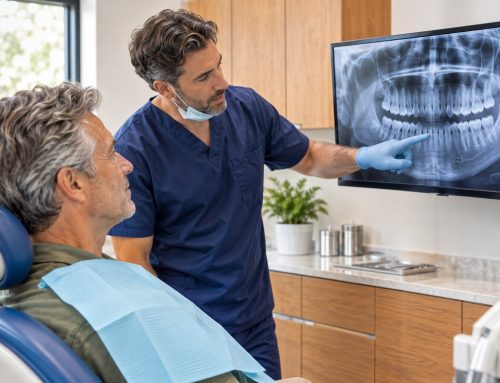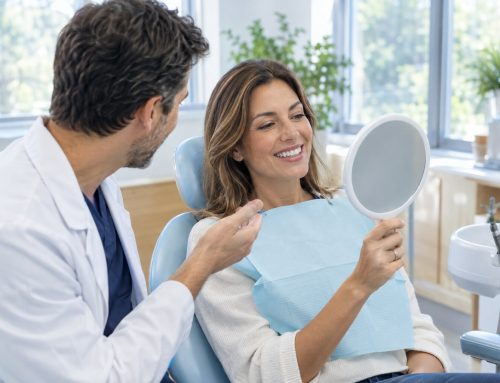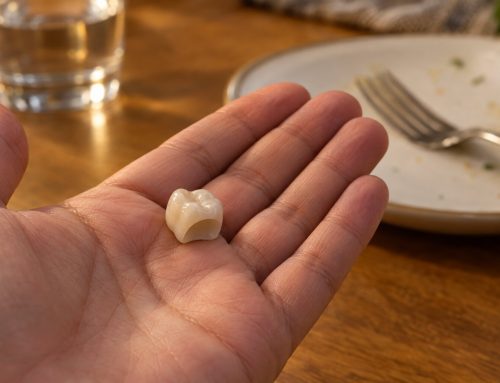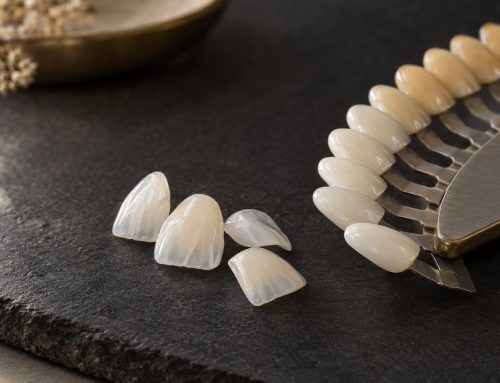

Losing a tooth, especially one near the front of your smile, is stressful enough without walking around with a gap while you figure out what comes next. That is where a flipper tooth often comes in. It is one of the quickest and most affordable ways to fill a space for a while, and many people have never heard of one until they need it.
Dr. Tricinella and our team at South Tulsa Dental put this guide together to explain what a flipper tooth is, when it makes sense, what it is like to live with one, what it typically costs, and how it compares with longer term options.
What Is a Flipper Tooth?
A flipper tooth is a small, removable partial denture. It is usually a thin plate of pink acrylic shaped to fit against the roof of your mouth or along your lower teeth, with one or more replacement teeth attached where the gaps are. Healthline’s dentist-reviewed guide to flipper teeth describes it as an acrylic removable partial denture that fits much like a retainer, and notes that it is meant mainly as a temporary replacement.
Some flippers simply rest snugly against the teeth around them. Others have small wire clasps. Guardian’s overview of dental flippers explains that a flipper can replace a single tooth or several, and that it may have one or more clasps, like a retainer, to hold it in place.
The name has a funny origin. A prosthodontics lecture from Augusta University’s Dental College of Georgia calls “flipper” a slang term that comes from the way a child can flip the appliance in and out with the tongue. Dentists often use more formal names such as “interim partial denture” or “temporary partial.”
Because a flipper is a type of partial denture, it falls under the same conversation we have with patients about dentures and partial dentures. Our overview of dentures in Tulsa covers the other types of removable teeth in more detail.
When Does a Flipper Tooth Make Sense?
Most people wear a flipper because they need to cover a gap now and get a longer lasting replacement later. Healthline notes that flippers are often used for front teeth while someone waits for an implant or a fixed bridge. Common situations include:
- After a tooth is taken out. The gums and bone need time to heal before a bridge or implant can be placed. Cleveland Clinic’s dental bridge guide says you may need to wait a few months after an extraction before getting a bridge. Our tooth extraction guide explains what that healing period looks like.
- While an implant heals. According to Cleveland Clinic’s page on dental implants, it can take three to nine months for the jawbone to fuse with an implant. For implants near the front of the mouth, the dentist usually makes a temporary tooth so you are not left with a gap while you recover.
- After a bone graft. If the jaw needs to be rebuilt first, the wait gets longer. Cleveland Clinic’s dental bone graft page says a graft needs at least three months to heal, and a large one can take nine to 12 months.
- After an injury. The Augusta University lecture lists replacing a missing front tooth for appearance, often right after an injury, as one of the most common uses. If a tooth was just knocked out or broken, start with our guide to dental emergencies and our article on broken tooth repair, since some injured teeth can still be saved.
- For teens who lose a permanent tooth. Implants have to wait until the jaw is done growing. Cleveland Clinic gives 18 as the typical minimum age for an implant, and its bridge guide notes that a temporary partial denture, sometimes called a flipper, may work better than a bridge for a child who loses a permanent tooth.
Sometimes a tooth cannot be kept at all, whether because of a deep infection, a cracked root, or a tooth that has died. Our post on what a dead tooth is and how it is treated explains when saving a tooth is still possible and when it is not.
How a Flipper Tooth Is Made and Fitted
Getting a flipper is usually simple. Healthline describes the process this way: your dentist takes an impression of your mouth with a soft material, and a dental lab uses that impression to build a custom flipper from dental-grade acrylic resin, with replacement teeth shaped to fill your gaps. Guardian adds that flippers can often be made quickly, sometimes within a few days.
When it is ready, your dentist checks the fit, looks for spots that press too hard on your gums, and shows you how to put it in and take it out. The American Dental Association’s guide to partial dentures offers a few tips that apply to flippers too:
- A new partial may feel awkward or bulky at first. That is normal, and most people get used to it.
- Putting it in and taking it out takes some practice.
- Never force it into place by biting down, because that can bend or break it.
- If one area gets sore, your dentist can adjust it so it fits more comfortably.
If your gums are still healing from an extraction, the fit can change as the tissue settles. That is one more reason to keep your follow-up visits.
Flipper Tooth Pros and Cons
A flipper is a useful tool, but it is not the right long-term answer for most people. Here is a balanced look.
Benefits
- Lower cost. Healthline notes that flippers are less expensive than most other types of partial dentures.
- Speed. Because the design is simple, you usually do not wait long once the impression is taken.
- A natural look. A well made flipper fills the gap so your smile looks complete.
- Easier chewing and speaking. Guardian notes that filling a gap can help you chew more comfortably and pronounce words more clearly.
- Keeping teeth in place. Both Healthline and Guardian point out that a flipper can help keep the teeth around the gap from shifting.
Drawbacks
- They break more easily. The thin, lightweight acrylic can crack. Healthline notes that a broken flipper needs to be repaired or replaced.
- They can feel bulky. The Oral Health Foundation says all-plastic partials can feel bulkier than metal ones and, if not well designed, may put pressure on natural teeth and gums.
- They loosen over time. A flipper grips the teeth around it, and Healthline notes that the grip can loosen with regular use, so you may need an adjustment.
- They can affect your gums. Healthline notes that because a flipper covers part of the gums and slows the flow of saliva there, it can raise the risk of gum recession, and that a flipper that is not cleaned well raises the risk of gum disease and tooth decay.
- They are not meant for long wear. The Augusta University lecture warns that a poorly designed flipper, or one worn for too long, can injure the gums, and that clasps can sometimes let nearby teeth move.
- Possible material allergies. Healthline mentions that some people react to denture materials, so tell your dentist about any allergies.
Can You Eat With a Flipper Tooth?
Yes, with some care. Healthline says you will probably chew better with a flipper than with an open gap, but warns that the material is fragile. Guardian recommends being careful with hard or chewy foods, which can damage or dislodge it.
It also helps to know what your flipper was designed to do. Many flippers that replace a front tooth are made mainly for appearance, and the Augusta University lecture describes this kind of replacement as one that is not meant to take biting pressure. In everyday terms, it is best not to bite straight into an apple, a crusty sandwich, or corn on the cob with a flipper front tooth. Cut food into smaller pieces and chew with your back teeth instead.
The ADA’s advice for new partial denture wearers is a good starting point:
- Start with soft foods cut into small pieces.
- Chew on both sides of your mouth to keep the pressure even.
- Avoid foods that are very sticky or very hard.
- Skip chewing gum while you are getting used to it.
Talking can feel different at first, too. The ADA suggests reading out loud and repeating any words that give you trouble.
Taking Care of a Flipper Tooth
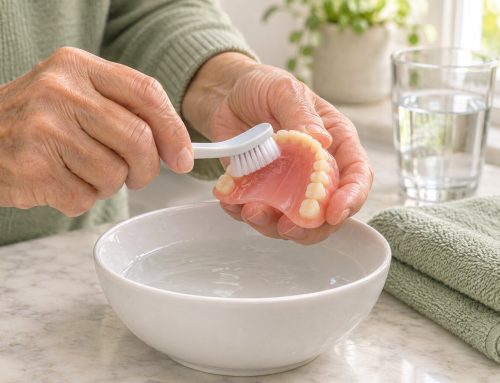
A flipper needs daily cleaning, just like your natural teeth. Healthline recommends brushing it every day with a soft brush, warm water, and a mild soap such as hand soap or dish soap, then rinsing it well before you put it back in. A few other points from Healthline and the ADA:
- Skip regular toothpaste. It can be too abrasive for denture acrylic.
- Keep it moist. A flipper that dries out is more likely to break and feel uncomfortable. Store it in water or a denture soak when it is out of your mouth.
- Avoid hot water. Water that is too hot can warp it.
- Clean over a towel or a sink of water so it does not crack if you drop it.
- Do not fix it yourself. The ADA warns that do-it-yourself repair kits and over-the-counter glues can damage a denture beyond repair. If it cracks or a tooth comes loose, call your dentist.
Your natural teeth matter just as much. Brush and floss them carefully, especially the teeth your flipper rests against. Our full guide on how to clean dentures walks through daily cleaning, soaking, and what not to use, and the same routine works well for a flipper. Since a partial that covers the gums can raise the risk of gum problems, our post on gum disease warning signs is worth a read as well.
Should You Sleep With a Flipper Tooth?
In most cases, no. Your dentist may ask you to wear a new partial around the clock at first to find sore spots, but after that the ADA says your dentist will probably recommend taking it out before bed and putting it back in the morning. Cleveland Clinic’s denture guide adds that removable dentures should come out for at least eight hours a day to give your gums a break and reduce harmful bacteria. Follow the instructions you were given for your own flipper.
How Long Can You Wear a Flipper Tooth?
A flipper is designed to be temporary. Healthline explains that it is usually worn for a short period while you wait for something more permanent, and that it is typically not recommended for long-term use because it can be uncomfortable and may sit loosely. The Augusta University lecture defines an interim partial as one worn for a planned period of time, with a more permanent replacement already in the plan.
That said, there are exceptions. Healthline notes that a flipper can be the best permanent option for someone who is not a good candidate for an implant or a fixed bridge, and Guardian notes that some people choose to wear one indefinitely. If that is your situation, regular checkups become even more important. The ADA explains that bone and gum ridges can shrink over time, which changes how a partial fits, and a loose partial can cause sores or infections.
How Much Does a Flipper Tooth Cost?
Flippers are among the least expensive ways to replace a tooth. National estimates give a general idea:
- Healthline says to expect roughly $300 to $500 for a front flipper tooth.
- Guardian gives a similar range for a single tooth and notes that more complex flippers that replace several teeth can cost more than $1,000.
These are national figures, not our fees. Your cost depends on how many teeth are replaced, the materials, and any adjustments or repairs, which Healthline notes can add to the total.
Dental insurance may help. Guardian explains that a flipper, if covered, often falls under the partial denture part of a plan, and that many plans have a waiting period, often six months to a year, before they pay for prosthetics. Our guide to dental insurance and payment plans covers how to check your benefits. When you visit us, our team will give you a personal estimate before any work begins.
Flipper Tooth vs. Other Ways to Replace a Missing Tooth
A flipper is often the first step rather than the last. Here is how it compares with the main longer term options.
Partial denture with a metal framework
This is the sturdier cousin of the flipper. The American College of Prosthodontists says a removable partial denture is typically built on a metal framework with pink plastic and replacement teeth. The Oral Health Foundation describes metal partials as stronger, thinner, often more comfortable, and longer lasting than all-plastic ones, though they cost more. They are still removable, and Guardian notes that the metal can sometimes show when you smile. South Tulsa Dental offers partial dentures, and you can read more on our dentures and partials page.
Dental bridge
A bridge is fixed in place and is not taken out at night. It uses crowns on the teeth beside the gap to hold a replacement tooth. Cleveland Clinic says a bridge usually lasts five to 15 years and can keep neighboring teeth from shifting into the space. The tradeoff, as Cleveland Clinic explains, is that the teeth on either side of the gap need to be shaved down for crowns. Learn more on our crowns and bridges page or in our dental bridge guide.
Dental implant
An implant replaces the tooth root with a small post in the jawbone, topped with a crown. Cleveland Clinic notes that implants do not require reshaping nearby teeth and that, with good care, they can often last a lifetime. They take the most time, though, which is exactly why so many implant patients wear a flipper during healing. Our dental implant guide covers the process and who is a good candidate.
Whatever you choose, it helps not to leave a gap open for too long. Cleveland Clinic recommends replacing missing teeth as soon as possible so other teeth do not shift into the space, and notes that the jawbone gradually shrinks after tooth loss.
Flipper Tooth FAQs
Does it hurt to get a flipper tooth?
Getting a flipper usually involves taking impressions and then a fitting appointment. A new flipper can feel tight or press on a sore spot for the first few days. Your dentist can adjust it so it fits more comfortably.
Can people tell I am wearing a flipper tooth?
Usually not in everyday conversation. The replacement tooth is shaded to blend in with your other teeth, and most of the plate sits behind your teeth or against the roof of your mouth. If your flipper has wire clasps, those may show a little depending on where they sit.
How soon can I get a flipper after a tooth is pulled?
It depends on your situation. Some flippers are made ahead of time so they can be worn right after an extraction, while others are made once the area has started to heal. Your dentist will tell you what timing makes sense for you.
What should I do if my flipper tooth breaks?
Stop wearing it if it has sharp edges and call your dentist. The ADA warns against home repair kits and over-the-counter glues, which can ruin the appliance and may contain harmful chemicals. Many cracks and loose teeth can be repaired, while a badly damaged flipper may need to be replaced.
Is a flipper tooth the same as a partial denture?
A flipper is one type of partial denture. It is usually made entirely of acrylic and meant for temporary use, while a traditional partial denture often has a metal framework and is designed to last longer.
Missing a Tooth? Let’s Talk About Your Options
A flipper tooth can be a smart, affordable way to get through the months between losing a tooth and getting a longer lasting replacement. The right choice depends on where the gap is, the health of the teeth around it, your timeline, and your budget. Dr. Tricinella and our team are happy to walk you through each option in plain language.
If a tooth was knocked out or hurts badly, call us right away. Patients with severe tooth pain are seen the same day, and our emergency dental services page explains how to reach us quickly. Parents can learn about our care for kids and teens on our family dentistry page.
You can find us at our office on East 61st Street, a block west of Sheridan. Browse our full list of dental services, book an appointment online, or fill out our new patient forms ahead of time. If dental visits make you nervous, ask about our sedation options. You can also call us at (918) 628-0834.