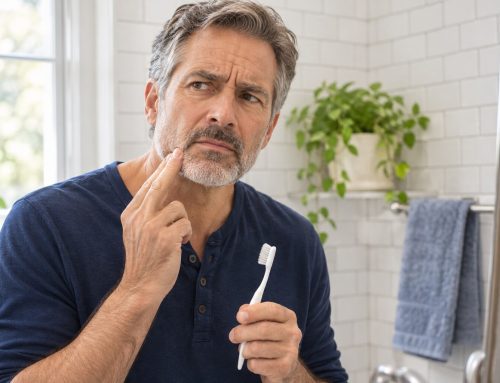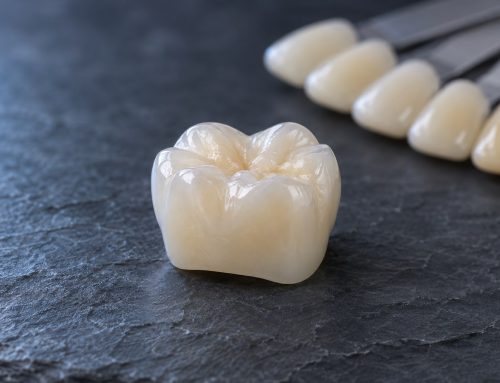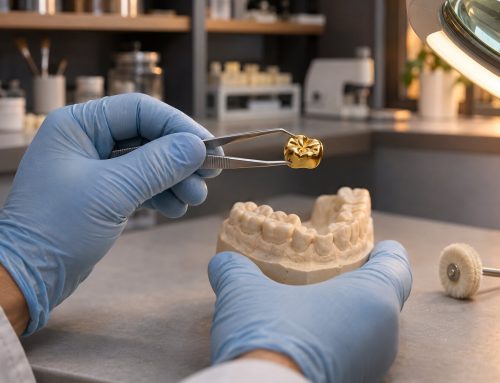

A crown is supposed to be the end of the trouble with a tooth, so it is frustrating when that tooth starts to ache. Crown pain is more common than many people expect. As Healthline’s guide to dental crown pain puts it, a crowned tooth is just as prone to problems as a regular tooth. The tooth is still under the crown, along with the gums around it and the edge where the crown meets the tooth, and trouble with any of them can make it hurt.
Dr. Tricinella and our team at South Tulsa Dental wrote this guide to help you tell normal healing from a sign that something needs attention. If you are still wearing a temporary crown, our guide to a temporary crown that hurts or falls off covers that stage. If the pain is severe, call us at (918) 628-0834. As our emergency dental services page explains, patients with severe tooth pain are seen the same day.
Is It Normal for a New Crown to Hurt?
A little discomfort is normal. Cleveland Clinic’s guide to dental crowns says some sensitivity for a couple of weeks after a crown is placed is normal, especially to heat and cold, and that soreness in the gums around the tooth should go away in a few days. Over-the-counter pain relievers such as acetaminophen or ibuprofen can ease the discomfort. Our dental crowns guide walks through the crown procedure itself.
A new crown can also just feel different. Colgate notes that a crowned tooth may have a slightly different shape than your original tooth and should feel normal after a few days. If your bite still does not feel comfortable after that, reach out to your dentist. Pain when you bite down or put pressure on a new crown usually means it sits a little too high, which a dentist can adjust easily. Biting pain can also come from a crack, decay, or an irritated nerve, as the sections below explain.
Some things are not part of normal healing. A crown should not cause pain or discomfort that keeps you up at night. Healthline says pain after a crown procedure should not last longer than about two weeks and suggests talking with a dentist about a lot of pain, or pain that has not gone away after two weeks.
Why Does My Crown Hurt? Common Causes
When crown pain lasts past those first weeks, or shows up months or years later, there is usually a specific reason. A damaged filling or crown is one of the possible causes of a toothache listed in Cleveland Clinic’s toothache guide, and our post on toothache causes and relief covers the others. Here is what can make a crowned tooth hurt.
The crown sits a little too high
A crown should fit into your bite the same way your other teeth do. If it sits too high, you hit the crown first every time you bite. Colgate’s crown guide says pain or sensitivity when you bite down usually means the crown is too high, and that adjusting it can be done easily. Healthline adds that a bite that feels “off” can lead to jaw pain and headaches. A high new filling can cause the same problem, as our post on tooth sensitivity after a filling explains.
The nerve inside the tooth is irritated
Unless a tooth has had a root canal, it still has a living nerve in the pulp, the soft tissue at the center of the tooth. Cleveland Clinic’s page on pulpitis notes that treating a tooth can, by itself, inflame the pulp. Early pulpitis is reversible if the cause is treated in time. In the advanced stage the tooth cannot recover, and the pulp eventually dies.
The type of pain offers clues. Reversible pulpitis usually means a quick, sharp twinge from cold or sweets that fades fast, with no sensitivity to heat and no pain when the tooth is tapped. Sensitivity to heat, cold, or sweets that lasts more than a few seconds, or pain when the tooth is tapped, points to the advanced stage, which needs a root canal or removal of the tooth. Healthline adds that an irritated nerve under a crown can become infected, with signs such as pain when you bite, gum swelling, sensitivity to temperature, and fever. If the nerve dies, the pain can fade even though the problem remains, as our post on a dead tooth explains.
Research gives a sense of how often this happens. A 2003 review in the Journal of Prosthetic Dentistry that combined 50 years of clinical studies found the three most common problems with single crowns were the need for root canal treatment (3%), fractured porcelain (3%), and the crown coming loose (2%). A 2023 review in BMC Oral Health pooled 37 studies and put nerve death after crowns, bridges, and similar restorations at about 5%, with higher rates when the tooth already had decay or a filling, or when a temporary crown stayed on for more than two weeks. The authors rated the certainty of that evidence as low, so treat these numbers as a rough guide.
Decay at the edge of the crown
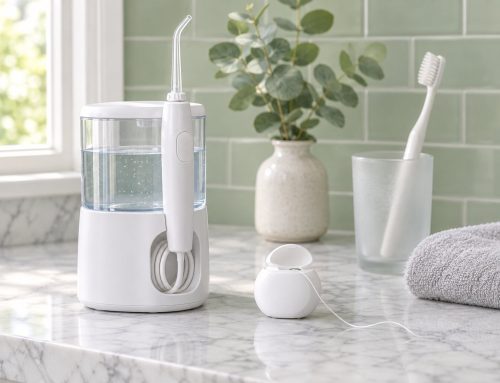
The tooth under a crown can still decay. Healthline explains that decay or a new cavity can form at the border where the tooth and crown meet, which can lead to persistent pain, and that a root canal may be needed if the cavity grows large enough to affect the nerve. A crown that does not fit properly can also trap bacteria and lead to decay, according to Cleveland Clinic. Our post on cavity treatment explains how decay is handled. Daily brushing and flossing along the gumline still matter for a crowned tooth, and if string floss is hard to manage around a crown, our comparison of a water flosser vs floss may help.
Decay matters even more for teeth that hold up a dental bridge. In the 2003 review, it was the most common problem reported with bridges, found in 18% of the anchor teeth.
A crack in the tooth or the crown
Crowns often go on teeth that were already weak or broken, and a crack can keep causing trouble under a crown. Sharp pain when you bite down, sensitivity to temperature changes or sweet foods, and swelling around the tooth are among the symptoms of a cracked tooth. The American Association of Endodontists (AAE) describes erratic pain when chewing, possibly when you release your bite, that may come and go, which can make it hard for a dentist to find the tooth. The AAE also notes that a crown gives a cracked tooth maximum protection but does not guarantee success, because some cracks keep spreading.
The crown itself can crack or chip too, and fractured porcelain was one of the three most common problems with single crowns in the 2003 review. A crack or chip is worth a call even if it does not hurt yet. Our guides to broken tooth repair and how zirconia crowns compare with other materials cover more on cracks and crown strength.
Grinding or clenching
Mayo Clinic lists tooth pain or sensitivity among the symptoms of bruxism, the medical term for grinding or clenching, and notes that severe bruxism can damage teeth as well as fillings, crowns, and other dental repairs. Colgate explains that grinding puts constant pressure on a crown, which can cause pain, especially if high areas of your teeth rub together. Night grinding is easy to miss, but jaw muscle pain on waking is one clue, and a sleep partner may hear it. Our post on teeth grinding and night guards explains more.
Sore or receding gums around the crown
Sometimes the pain is in the gums rather than the tooth. Over time, gums can pull back from the edge of a crown and expose part of the root. Poorly fitting restorations are one of the causes of gum recession, along with plaque and tartar buildup, gum disease, brushing too hard, and grinding. Exposed roots are covered with cementum rather than enamel, so they can be sensitive to heat, cold, sweets, brushing, and flossing. Our guides to receding gums and gum disease cover both in more depth.
A loose crown
A crown is cemented in place, but it can come loose. It was the third most common problem with single crowns in the 2003 review, and a loose crown is on Cleveland Clinic’s list of reasons to call your dentist. Cleveland Clinic’s crown guide also advises avoiding ice cubes, extremely hard nuts, popcorn kernels, and very sticky foods like taffy and caramels, which can damage a crown or pull it off. If a crown has come off completely, our emergency dentist guide explains what to do until your visit. If the whole tooth moves rather than the crown, see our guide to a loose adult tooth.
An old root canal acting up
Crowns are often placed after a root canal to protect the tooth, so many crowned teeth no longer have a living nerve. They can still hurt. The AAE explains that a tooth treated with a root canal can heal improperly and become painful or diseased months or even years later. New decay or a loose, cracked, or broken crown can expose the tooth to new infection, and the tooth itself can fracture. The AAE describes retreatment as a second chance to save the tooth. Our guide to root canal treatment covers the basics.
Pain that is not coming from the crown
Not every ache near a crown starts in the crowned tooth. Mayo Clinic notes that pain in the upper back teeth is a fairly common symptom with sinus conditions and recommends seeing your dentist first to look for a dental cause. Our post on sinus tooth pain explains how to tell the difference.
Why Does My Crown Hurt When I Bite Down or Put Pressure on It?
Pain when you bite or chew narrows the list. The kind of pain can point toward a cause, but only an exam can confirm it.
- It hurts every time you bite, and the crown is new. Colgate says this usually means the crown is too high.
- A sharp jolt when you chew or let go, and it comes and goes. This fits the pattern the AAE describes for a cracked tooth.
- The tooth is tender when you bite or when it is tapped, and the ache lingers. Pain when a dentist taps the tooth is a sign of advanced pulpitis, and Healthline lists pain when you bite among the signs of infection.
- The crown feels like it moves. Healthline notes that a broken, loose, or cracked crown needs to be fixed.
- Your jaw is sore when you wake up. Grinding or clenching at night may be part of the problem.
Why Would a Crown Start Hurting Years Later?
Crowns last a long time, but not forever. Cleveland Clinic puts the average lifespan of a crown at 5 to 15 years and says crowns can last upwards of 30 years with proper care. When a crown that has felt fine for years starts to hurt, the usual reasons are:
- Decay at the edge where the crown meets the tooth
- An old or damaged crown. Colgate’s article on crown pain notes that a crown that does not fit properly, or an older crown that has been damaged, can cause sensitivity and would need to be replaced.
- Gum recession that exposes part of the root at the edge of the crown
- A new crack. Teeth wear down with age, people 50 and older are more likely to have cracked teeth, and biting hard foods like ice, candy, and popcorn kernels can crack a tooth.
- A nerve that gives out over time. In a 2005 study in the International Endodontic Journal, about 84% of teeth with healthy nerves under a single metal ceramic crown still had healthy nerves after 10 years, and about 81% after 15 years.
- An old root canal that did not heal as expected or has become infected again
Some of these problems are quiet at first. Cracked teeth do not always cause symptoms, which is one more reason to keep up with regular teeth cleanings and dental checkups, where your dentist can spot decay at the edge of a crown, gum recession, or a worn crown before it starts to hurt.
How to Ease Crown Pain Until Your Appointment
These steps can ease symptoms while you wait to be seen, but they do not fix the cause.
- Take an over-the-counter pain reliever. Ibuprofen or acetaminophen can help. Follow the label directions.
- Keep food and drinks at moderate temperatures. Hot and cold foods often make tooth pain worse.
- Go easy on the tooth. Healthline notes that avoiding sticky, sweet, and hard foods may help lessen crown pain.
- Try a toothpaste for sensitive teeth. The American Dental Association’s MouthHealthy site explains that desensitizing toothpaste helps block sensation from the tooth surface to the nerve and usually takes several applications to work.
- Rinse with warm salt water. Cleveland Clinic’s toothache guide suggests mixing half a teaspoon of salt into 8 ounces of warm water, swishing for 30 seconds, and spitting it out.
- Use a cold pack on the outside of your jaw. The same guide suggests holding ice wrapped in a clean towel against your jaw for about 20 minutes, several times a day.
- Do not put aspirin on the tooth or gums. For a tooth that might be cracked, the AAE advises against placing aspirin on the area or using numbing gels or ointments.
If the pain keeps coming back, do not wait it out. Colgate notes that crown pain that persists rarely goes away on its own.
How Dentists Find the Source of Crown Pain
Finding the cause matters most, because the fix for a high crown is very different from the fix for an infected nerve. A dentist will ask when the pain began and what sets it off, then check the crown, the gums around it, and your bite.
For a nerve that may be inflamed, Cleveland Clinic describes heat or cold tests, gentle tapping on the tooth, an electric pulp test, and X-rays to look for defects and signs of infection. When a crack is suspected, a dentist may have you bite down on a small stick, shine a light through the tooth, use a staining dye, or use a thin probe to help find the crack. Some patients are referred to an endodontist, a specialist in the pulp and roots of teeth.
At South Tulsa Dental, our technology includes digital X-rays and an intraoral camera. You can see your X-rays and pictures of your teeth on a large monitor, so you and Dr. Tricinella can look at the problem together.
How Crown Pain Is Treated
What a dentist recommends depends on the cause:
- A crown that sits too high: adjusting the crown so it meets your other teeth evenly.
- Sensitivity: a desensitizing toothpaste or an in-office fluoride gel, according to the ADA, or fluoride varnish and other desensitizing agents for exposed roots. Our guide to sensitive teeth treatment covers more options.
- An inflamed or infected nerve: root canal treatment. Colgate explains that a dentist can sometimes drill an access hole in the crown and do the root canal without removing and replacing the crown. Other times the crown has to come off, and crowns often cannot be reused once removed.
- Decay at the edge of the crown: treating the decay, plus a root canal if it has reached the nerve.
- A worn, damaged, or poorly fitting crown: a replacement crown.
- A cracked tooth: the AAE explains that a crack reaching the pulp can be treated with a root canal and a crown, but a crack that extends below the gum line means the tooth cannot be saved and will need to be extracted.
- Grinding: a custom mouth guard.
- An old root canal that has failed: retreatment, often by an endodontist.
Crowns at South Tulsa Dental
If your tooth needs a new crown, South Tulsa Dental offers crowns in ceramic and gold. A ceramic crown can be made in a single visit. It is designed with a computer and 3D camera, glazed in a porcelain oven to match your teeth, and cemented, and the bite is checked before you leave. The visit takes a little over an hour, with no messy impression material. A gold crown takes two visits. Our guides to same-day dental crowns and gold crowns explain the differences, and Dr. Tricinella and his staff can talk through the pros and cons of each. You can learn more on our crowns and bridges page.
Before any treatment, you will get a treatment plan that lists all of the costs, so you can decide with all of the information. If dental visits make you nervous, we offer nitrous oxide and conscious sedation, which our sedation dentistry page describes, and our post on dental anxiety has more ideas for feeling at ease.
When Crown Pain Needs Prompt Care
Call your dentist if you notice any of these signs, drawn from Cleveland Clinic and Healthline:
- Pain that keeps you up at night
- Pain that has not gone away two weeks after a new crown
- A crown that feels loose, or one with cracks, chips, or sharp edges that bother your tongue or gums
- Bad breath or a bad taste
Cleveland Clinic says to call a dentist right away for a toothache that lasts longer than two days, swelling in your face or jaw, or pain when you open your mouth wide. Some symptoms are more serious. Its abscessed tooth guide advises heading to the nearest emergency room if a tooth abscess comes with a fever of 100.4 degrees Fahrenheit or higher, confusion, difficulty swallowing, a fast heart rate, or facial swelling. Its toothache guide adds that unbearable tooth pain along with fever and chills is a dental emergency, and to call a dentist or go to the nearest emergency room right away.
In Tulsa, you can call our office at (918) 628-0834. Patients with severe tooth pain are seen the same day, and if a toothache starts during normal business hours, we schedule a same-day appointment. After hours, our answering machine gives an emergency number to reach our emergency service. Our hours are Monday through Wednesday 8:00 to 5:00, Thursday 12:00 to 7:00, and Friday 8:00 to 12:00.
Crown Pain FAQs
How long should a new crown be sensitive?
Some sensitivity, especially to heat and cold, is normal for a couple of weeks, and sore gums around the tooth usually settle within a few days. Call your dentist if the pain is strong, keeps you up at night, or is still there after two weeks.
Will crown pain go away on its own?
Mild sensitivity after a new crown usually fades as the tooth settles. Pain that lingers, or that starts months or years later, rarely goes away on its own, and an infected tooth can stop hurting when the nerve dies even though the infection keeps spreading. Have it checked even if the pain comes and goes.
Can a tooth with a crown get a cavity?
Yes. Decay can form at the border where the crown meets the tooth, and a crown that does not fit properly can trap bacteria. Brushing at least twice a day with a fluoride toothpaste, flossing daily, and regular dental visits help protect a crowned tooth. If the decay reaches the nerve, a root canal may be needed.
Can you get a root canal through a crown?
Sometimes. A dentist may be able to drill an access hole in the crown and complete the root canal without removing and replacing the crown. In other cases the crown has to come off, and crowns often cannot be reused after removal. Your dentist or an endodontist will decide which approach fits your tooth.
Why is my crowned tooth sensitive to cold?
In the first couple of weeks, some cold sensitivity is a normal part of healing, since a tooth without a root canal still has its nerve. Later on, common causes include gum recession at the edge of the crown, decay, a crack, or an irritated nerve. A sharp twinge from cold that fades quickly fits early, reversible pulpitis, while sensitivity that lasts more than a few seconds points to a more advanced problem.
Get Crown Pain Checked in South Tulsa
A crowned tooth should feel comfortable once it heals. If yours aches, hurts when you bite, or has started reacting to hot and cold, Dr. Tricinella and our team can find out why and talk through your options. Book an appointment online or call (918) 628-0834, and new patients can fill out our new patient forms ahead of time. You will find us on East 61st Street, a block west of Sheridan.